How to Book
Call or request a job through the site and tell us what the door is doing: grinding, catching at one spot, or jumping the track when it closes.
Sound reveals roller wear
That description matters more than the door's age, because roller wear shows up as a sound and a motion problem before it shows up as a part you can see from the driveway. We schedule a truck to look at the track and rollers in person.
Same-visit roller quotes
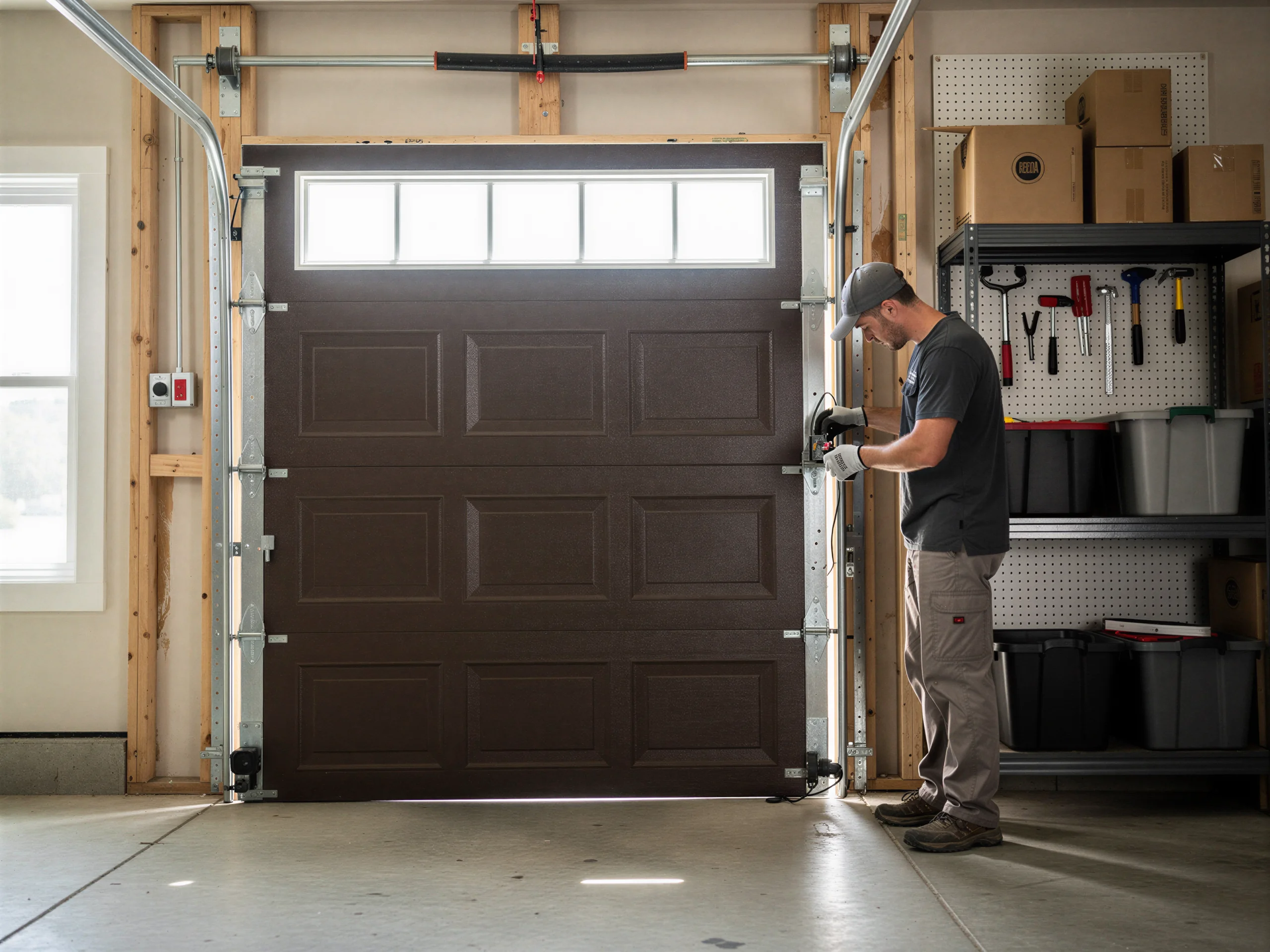
Most roller jobs are diagnosed and quoted on the same visit, since a tech can tell nylon rollers with worn bearings from a bent track or a misaligned hinge by running the door by hand before touching the opener. If you've already got a part number or know it's a 7-foot or 8-foot door, mention it when you book.
Track bend limits rollers
It won't change the visit, but it speeds up what's on the truck. One limit worth saying up front: if the track itself is bent or the door is sagging on one side, roller replacement alone won't fix it. We'll tell you that at the door, not after the rollers are in.
The Symptom
A roller going bad doesn't announce itself all at once. It starts as a rhythmic grind or clunk each time that one wheel rolls through the track, usually worse on a cold start or after the door's been sitting all day in the heat.
Catching at one spot
As the roller wears, the door starts to hesitate or catch at the same spot on every cycle, because the flat spot on the wheel or the worn stem is hitting the same point in the track run.
Rollers jumping the track
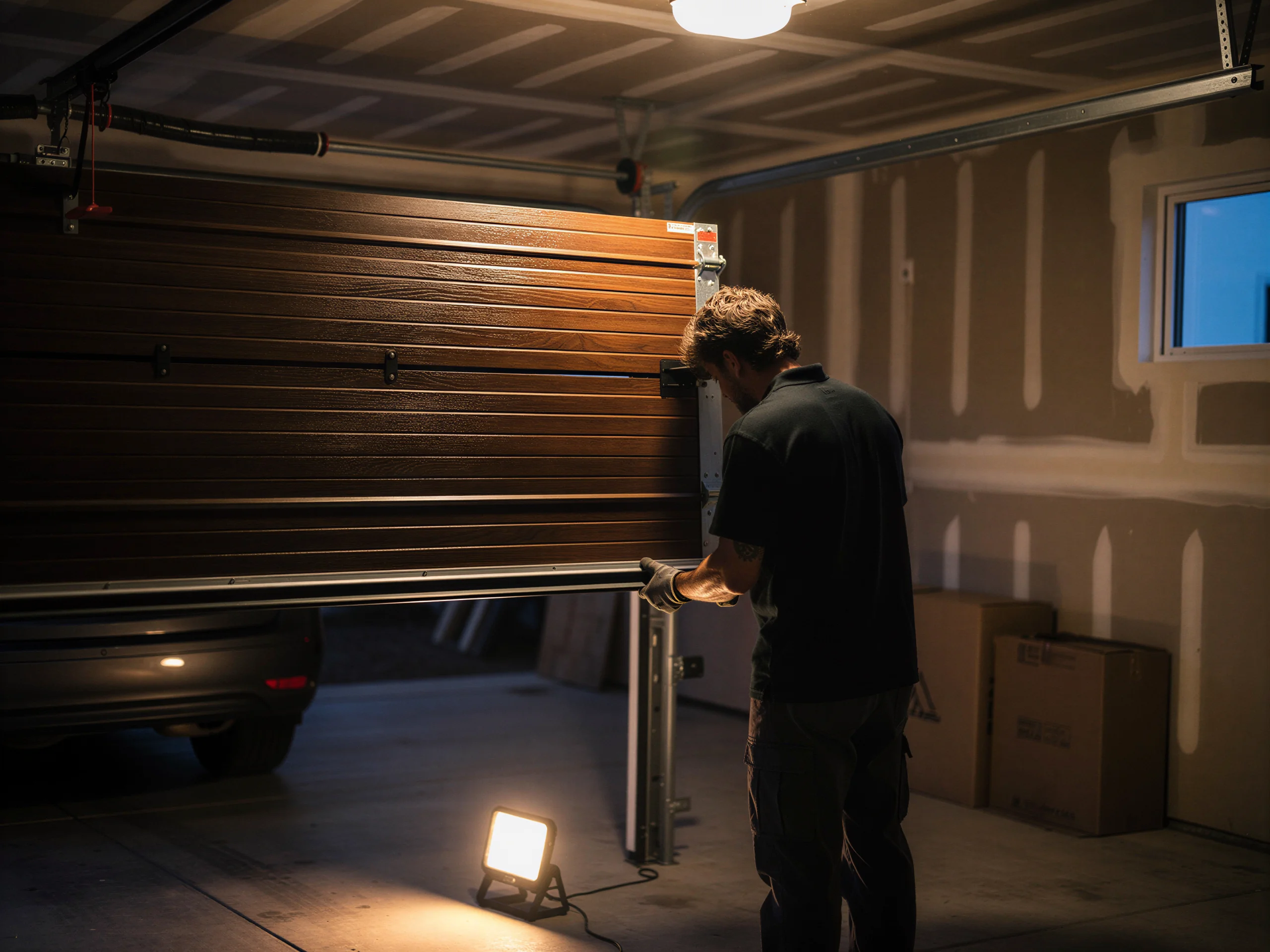
Left alone, a bad roller can walk out of the track entirely, especially on the bottom panel where the stress load is highest. At that point the door can bind, jump, or come off the track on one side, which is a different job than a simple roller swap.
Rollers versus springs
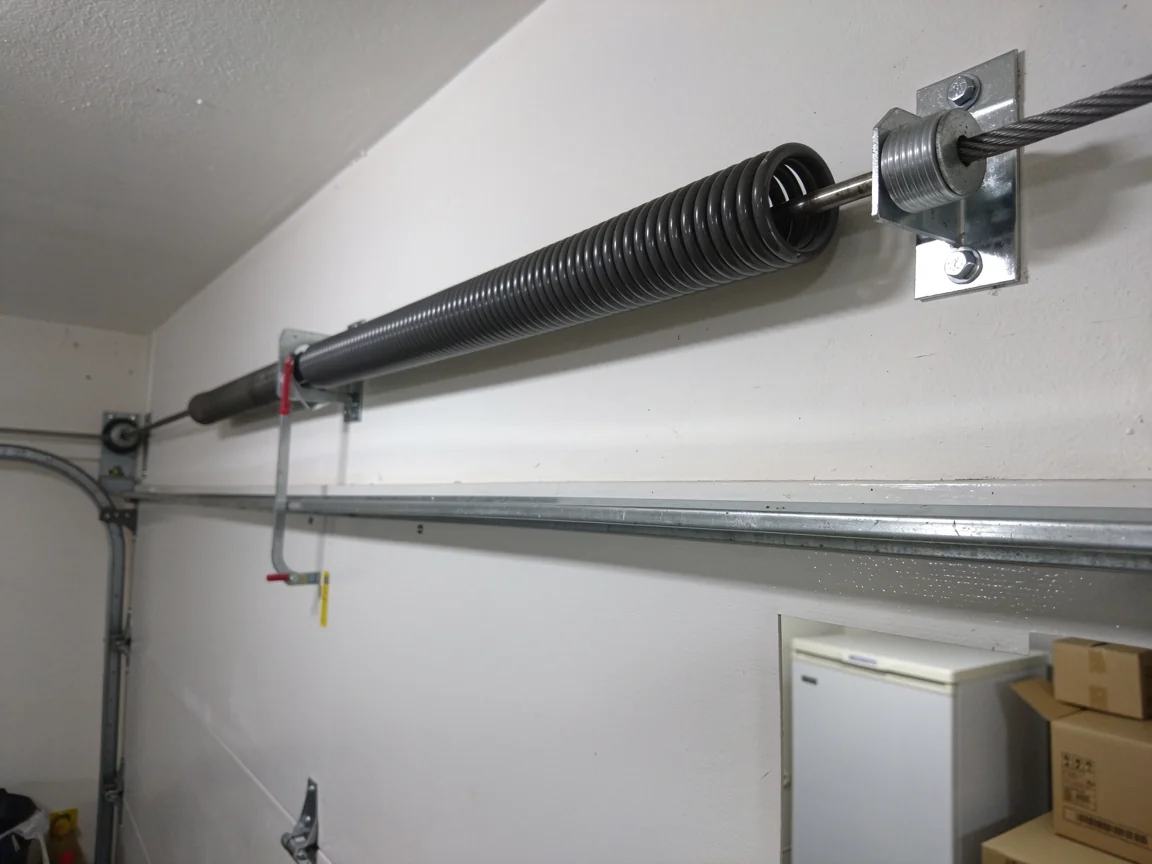
The tell that it's rollers and not springs: the door still moves under power or by hand, it just sounds rough and sticks in spots, rather than feeling heavy or refusing to move at all. Springs carry weight; rollers carry motion. If your door feels fine to lift by hand but sounds like a shopping cart, that's rollers.
Doing It Yourself
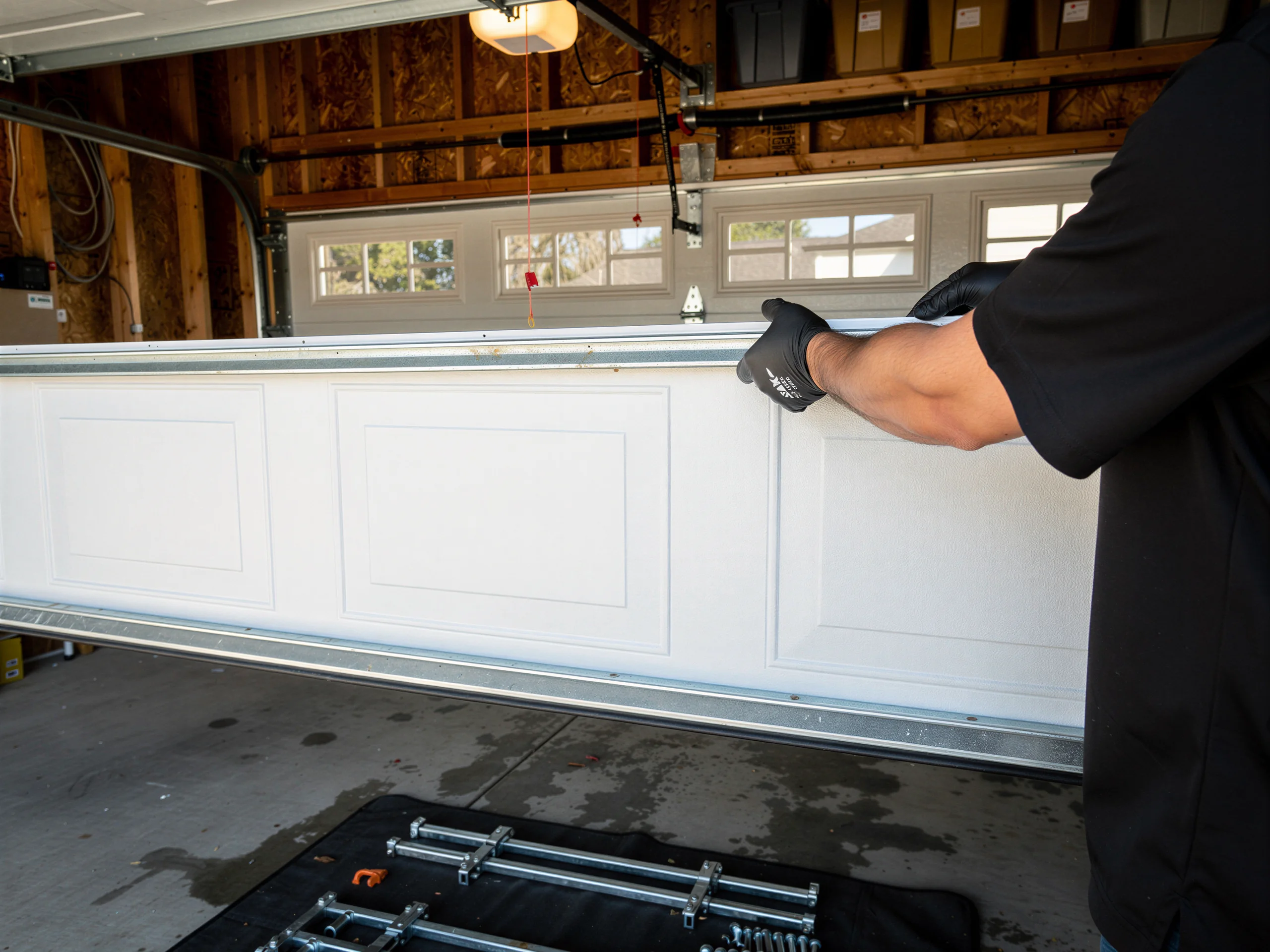
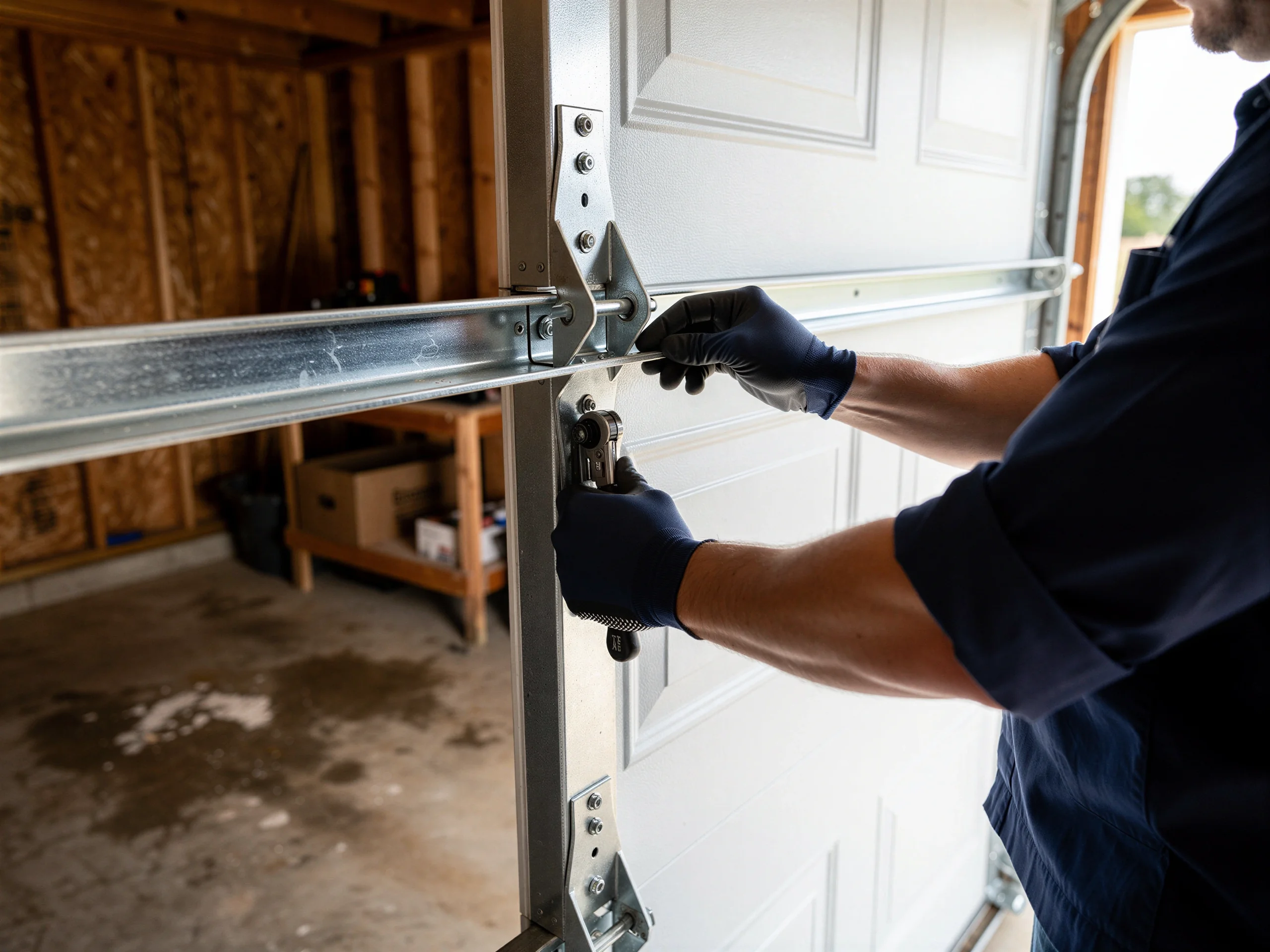
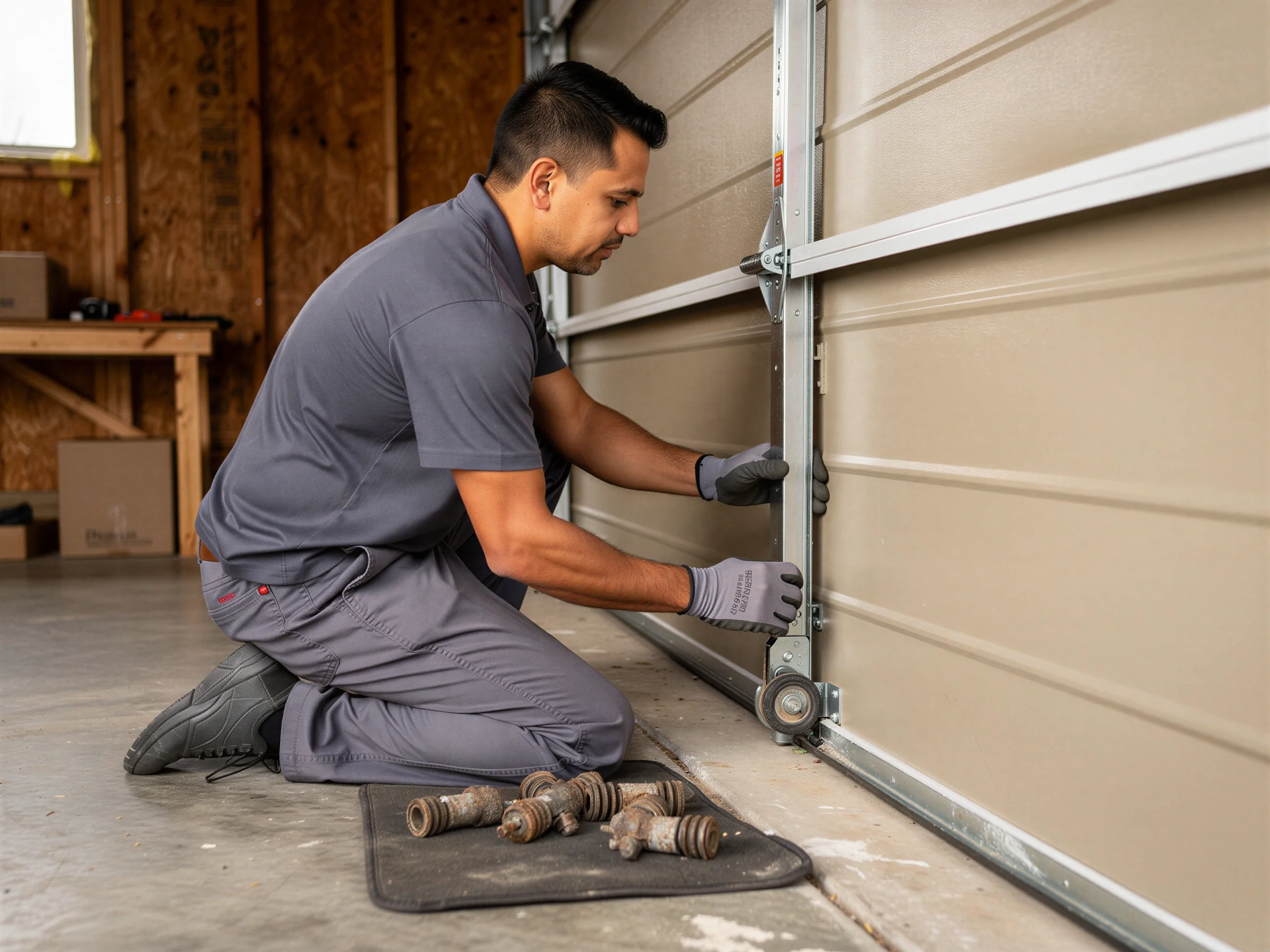
Rollers are one of the more approachable DIY garage door parts, and plenty of owners replace the easy ones themselves. The top and middle rollers on a standard track are usually a pull-the-bracket, swap-the-wheel job with the door in the down position and the opener disconnected.
Bottom rollers under load
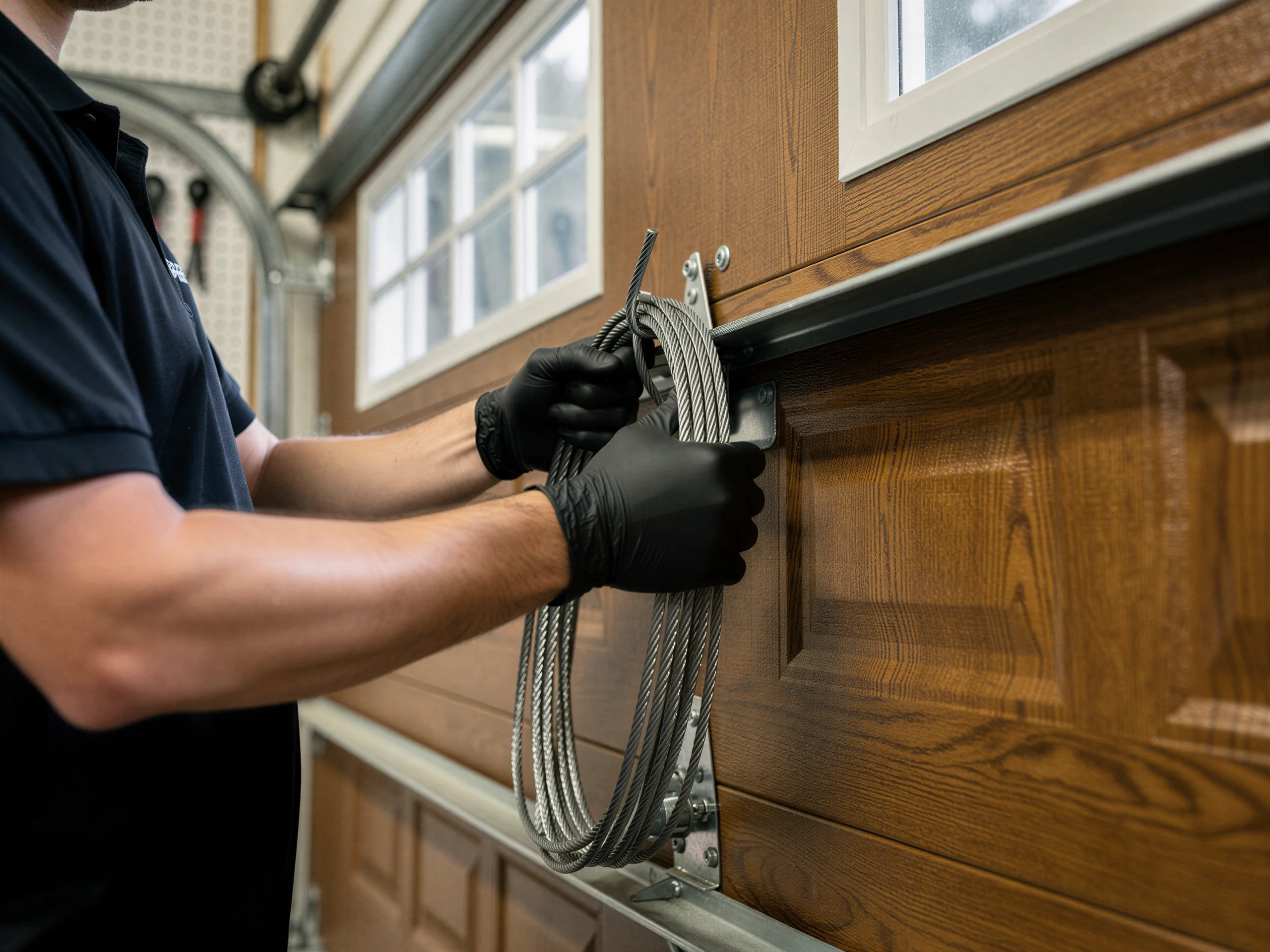
Where it gets harder: the bottom rollers sit under full door weight and under a cable bracket on each side. Pulling those without relieving tension on the cable or without knowing which bracket is load-bearing is how people crush a finger or drop a panel corner.
Unplug before bracket work
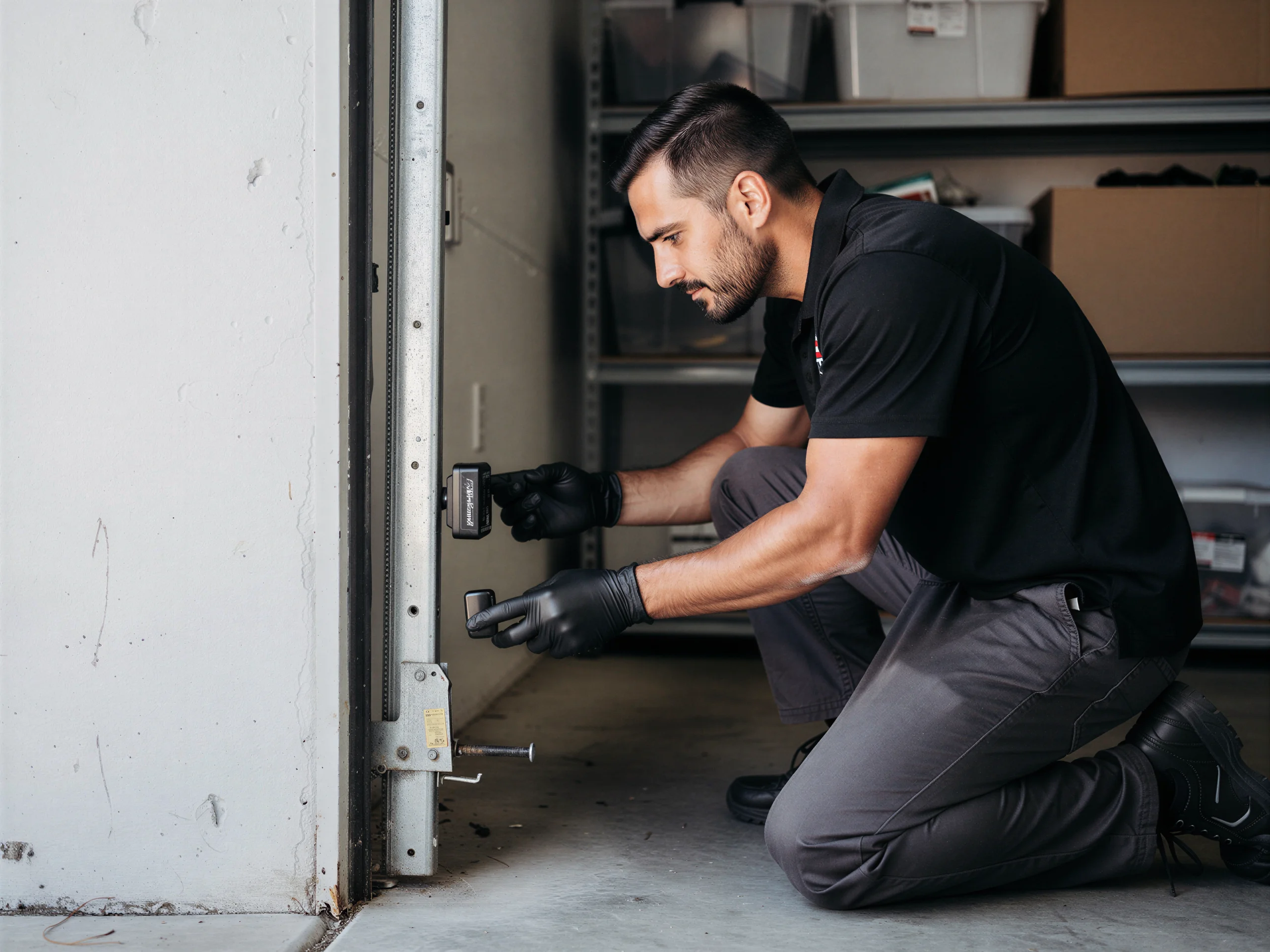
If your door has a torsion spring, don't touch anything near the bottom brackets until the door is fully down and the opener is unplugged. Nylon rollers are a straightforward swap.
Steel roller alignment issue
Steel rollers with sealed bearings, or rollers on a door that's already sagging slightly on the track, are a different job, because you're also correcting an alignment problem the old roller was masking. If you're not sure which one you've got, that's a reasonable point to call instead of guess.
Why This Fails Locally
Grapevine and the towns around it, from Trophy Club 7 miles out to Keller at 9, sit in housing stock mostly built from 1959 through the 2010s, with the bulk of it going up through the 1980s and 90s. That matters for rollers specifically: a door installed in the 80s or 90s is now 30-plus years into its service life, and factory-original nylon rollers don't last anywhere near that long under daily cycling.
The climate band here is moderate heat, not the extreme swings you'd get further out, but garage interiors still run well above outdoor temperature on a sunny afternoon. That heat cycling dries out and hardens nylon rollers faster than the plastic was built for, which is why a roller that looks fine on a cool morning can be grinding again by midafternoon.
Across a service area with over 67,000 owner-occupied houses, a big share of those built in that same two-decade window, roller wear isn't an occasional callout. It's one of the most common reasons a door starts sounding rough well before anything else on it fails. The spring usually outlasts the rollers by years, which is why a roller job on an older door often shows up alone, not bundled with other repairs.
Talk to a local pro
Garage door service in Grapevine?
Same-day service with honest, upfront quotes.