How to Book
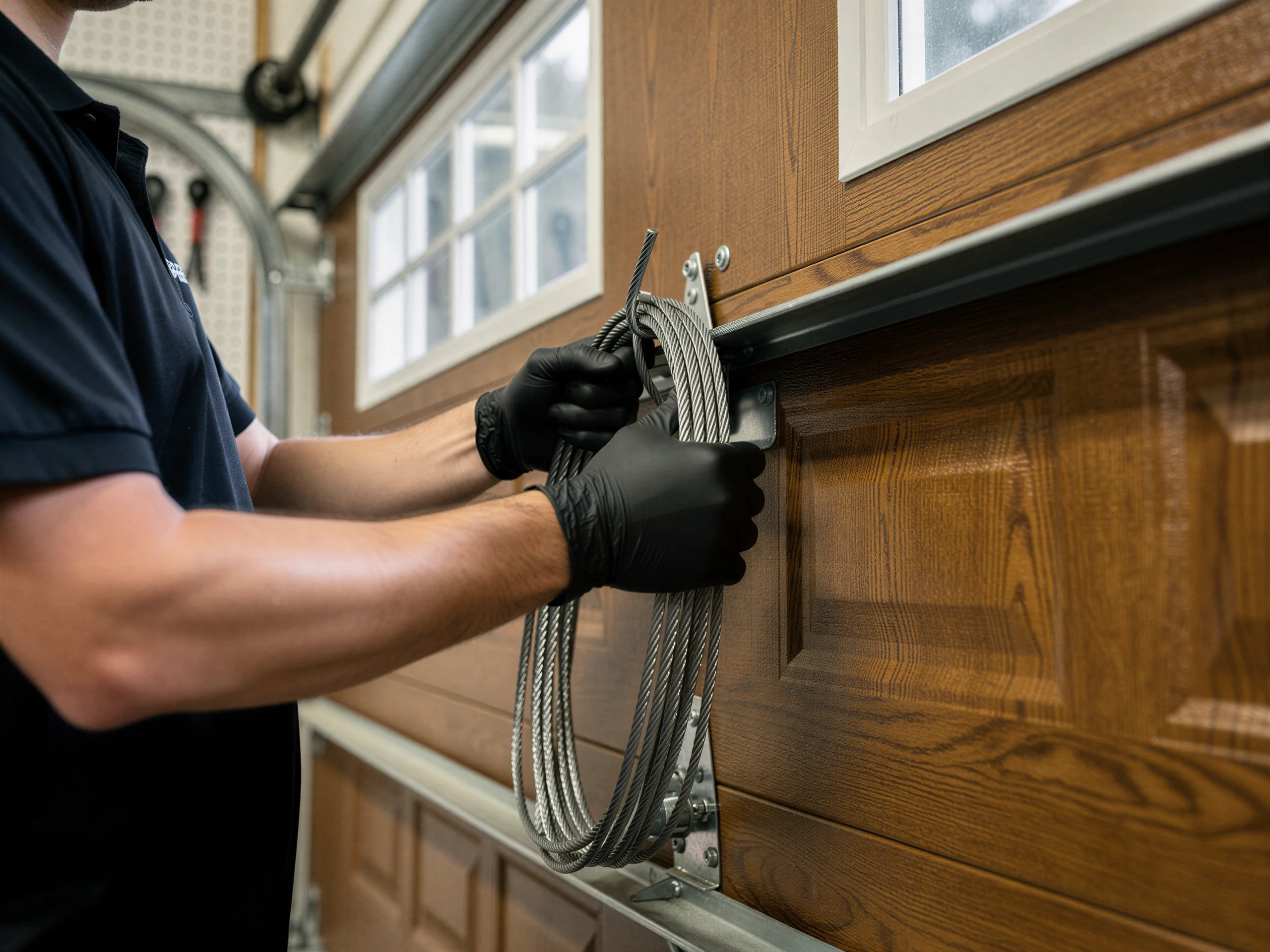
We run this job out of Grapevine, about 11 miles from Lantana, so there's no local branch to call - just one crew making the drive. That distance doesn't change what we bring with us, but it does mean we schedule the visit rather than walk over. Call ahead, tell us the door's age if you know it (most in Lantana are 2007 or newer), and we'll bring the right spring cable and opener parts for that generation of hardware instead of guessing at what a 1980s door would need. Because the housing here skews newer than much of the wider service area, we're usually dealing with torsion systems that are still within their expected working life - which changes the diagnosis conversation before we even open the panel.
The Complications
The complication in Lantana isn't age, it's the opposite - these doors are young enough that owners assume nothing should be going wrong yet, so when a spring fails or a sensor drops out, it reads as defective rather than due.
Springs at seventeen years
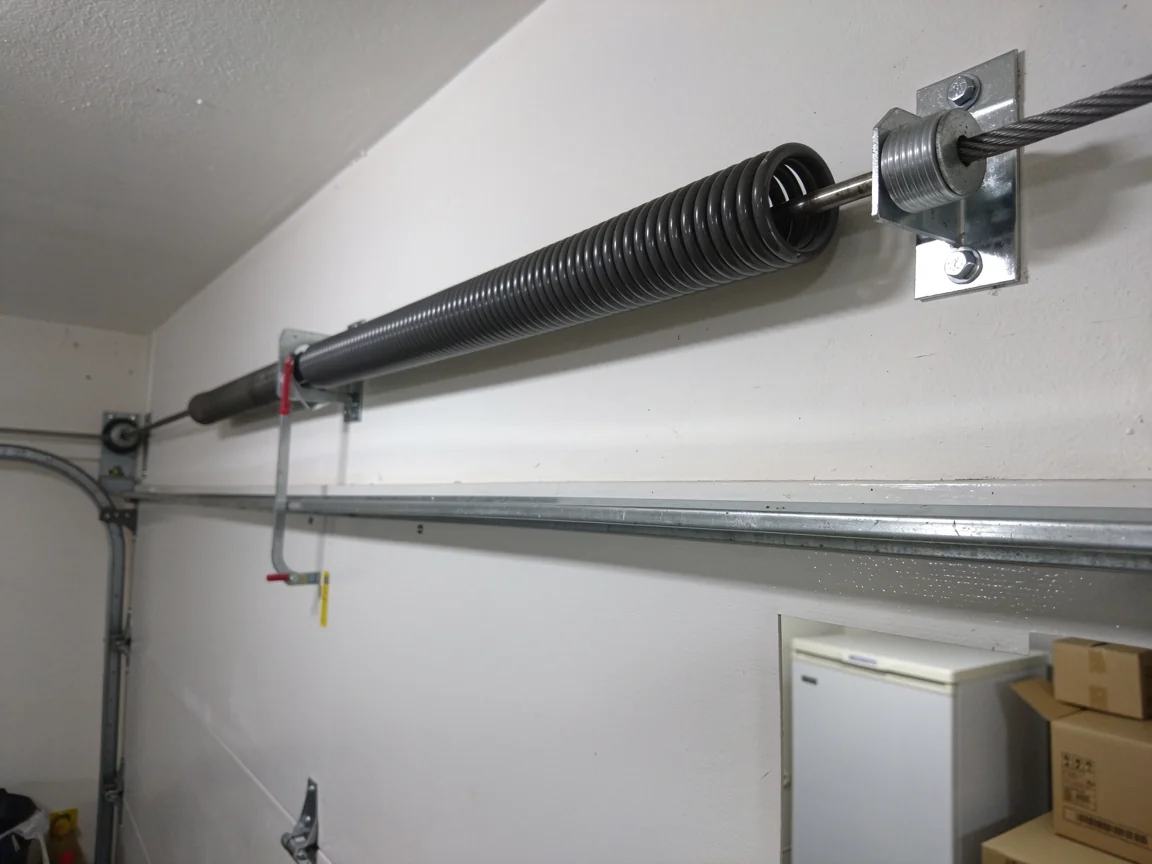
A door built around 2007 is roughly 17 years into a torsion spring's typical cycle count, which is exactly when the first spring on a daily-use door starts to go.
Old-habit mismatch on newer
Across the wider service area the median build year sits around 1999, with houses dating back to 1959, so a tech used to older stock can default to habits that don't fit a newer build - treating a modern steel panel like older lumber-core doors, or assuming worn weatherstripping instead of checking a newer composite seal properly.
Doing It Yourself
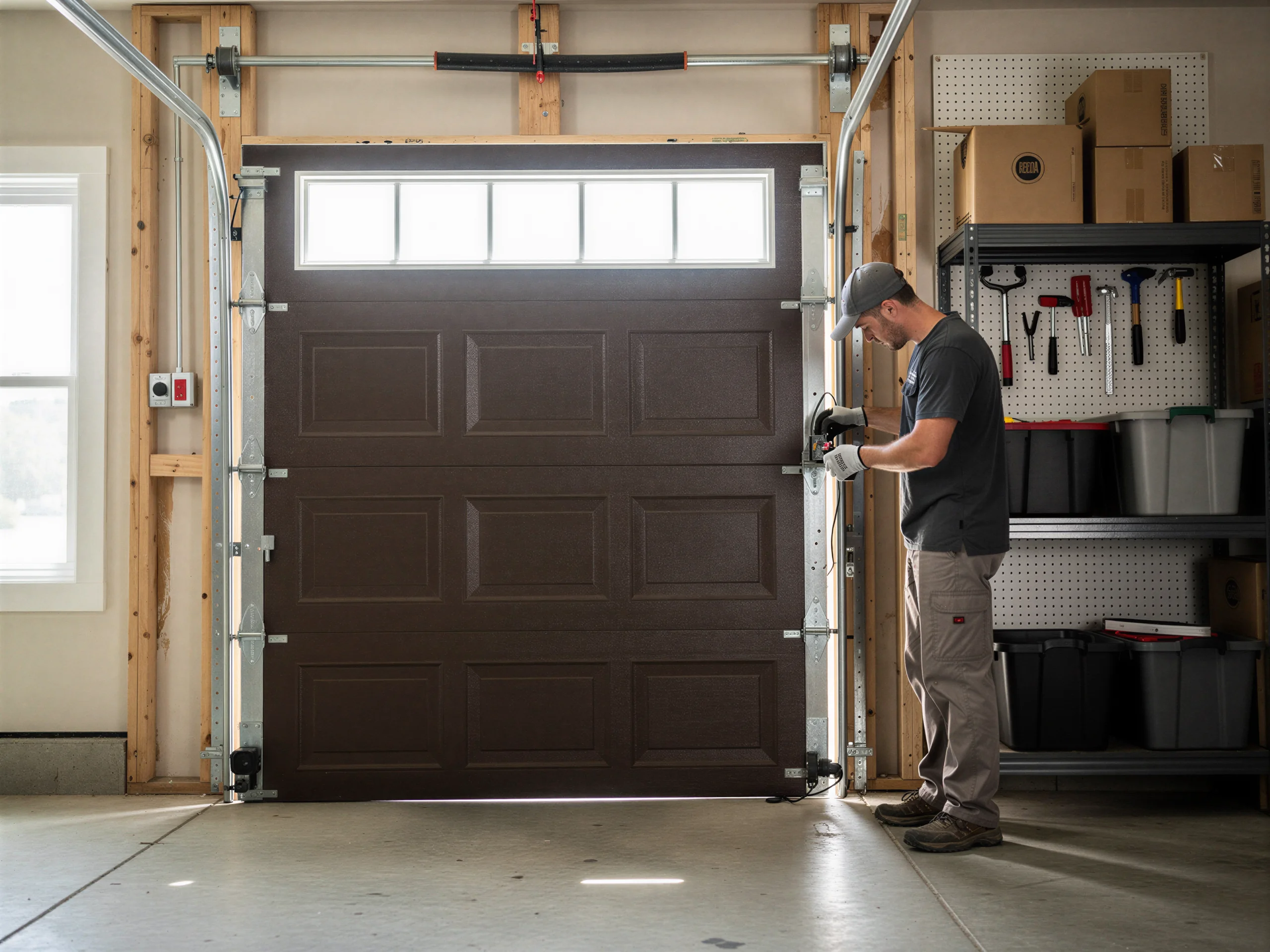
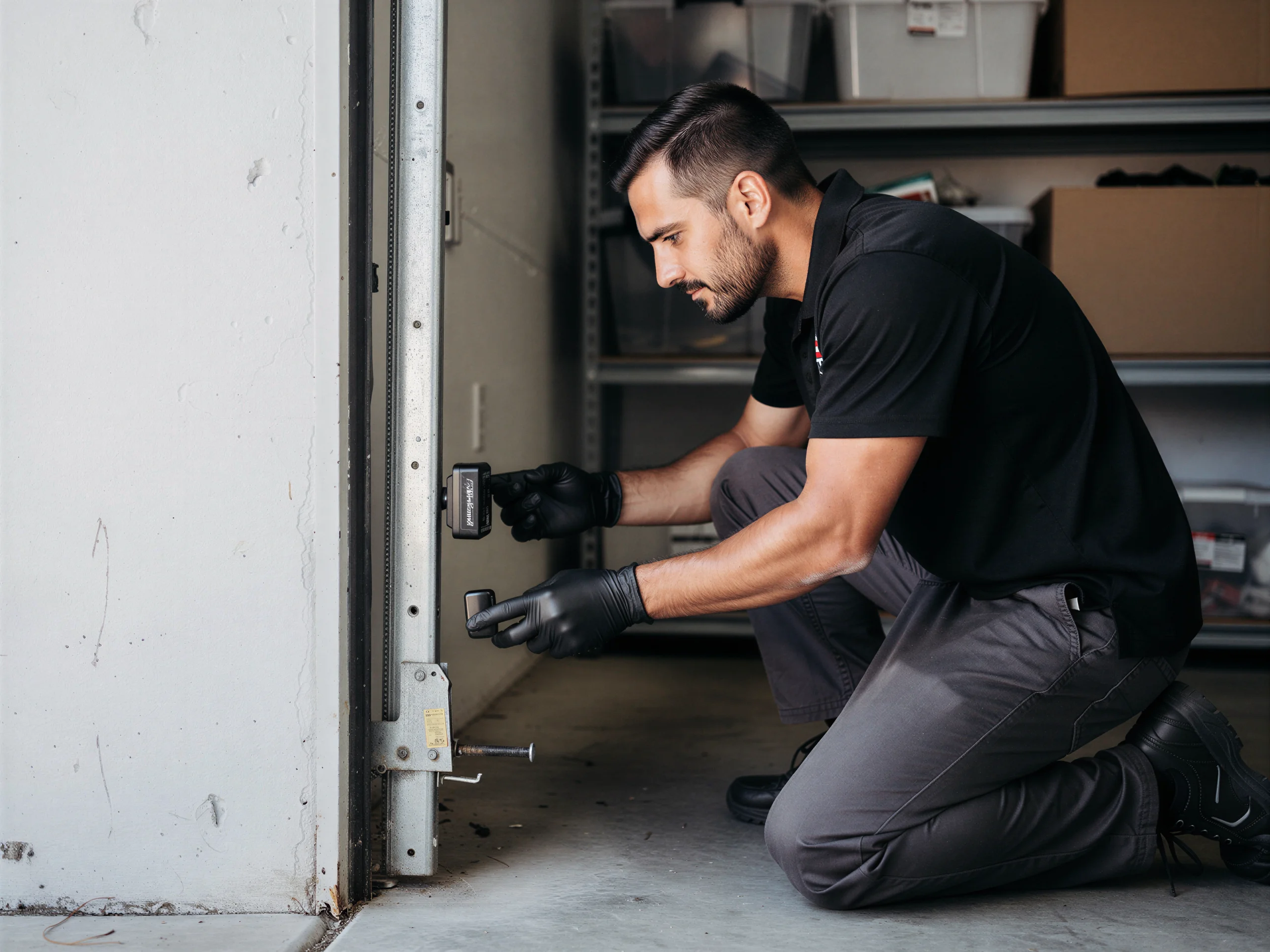
A 2007-era door usually has an opener with a circuit board and safety sensors that are still diagnosable without specialty tools - check the sensor LEDs, check for a blinking error code on the wall unit, check the photo-eye alignment. That part is reasonable to do yourself. What isn't reasonable is the torsion spring. Even on newer hardware, a spring under full tension can put you in the ER faster than it takes to read this sentence, and the wind cones on homes built in this era aren't necessarily the same size as what you'll find at a hardware store. If the door won't open, won't close, or drops suddenly, that's a call, not a project.
What the Fix Involves
On a door from this build era, the fix usually starts with the opener logic board or the sensor wiring before it starts with the mechanical parts, since houses built around 2007 typically shipped with chain or belt-drive openers that have more electronics than the cable-and-pulley setups common on 1980s and 90s stock elsewhere in the service area.
Factory-spec spring matching
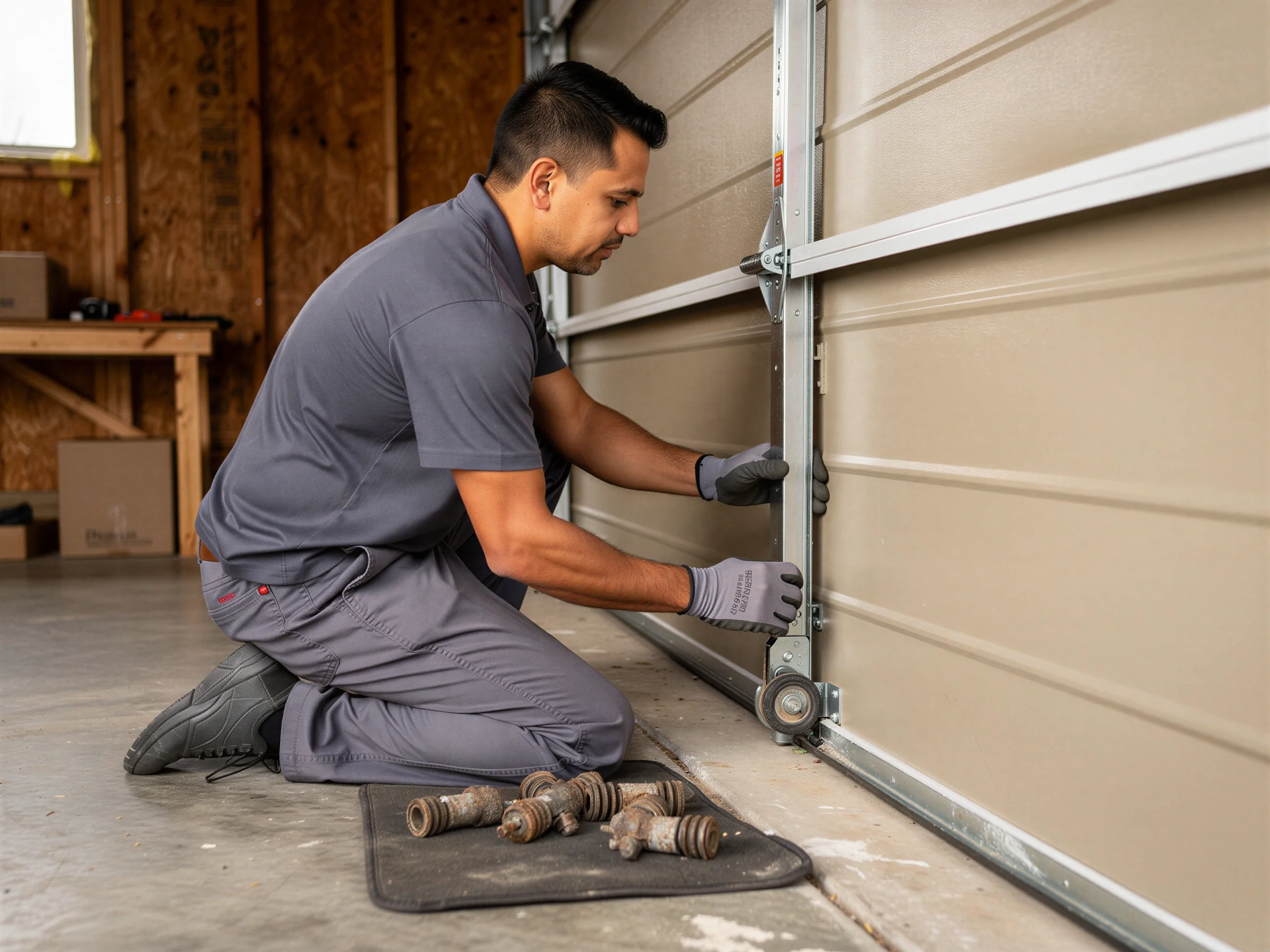
If it is a spring, we're matching wire gauge and wind direction to a torsion system that's still factory-spec in most cases, not retrofitted over decades like older houses nearby.
Rare panel replacement
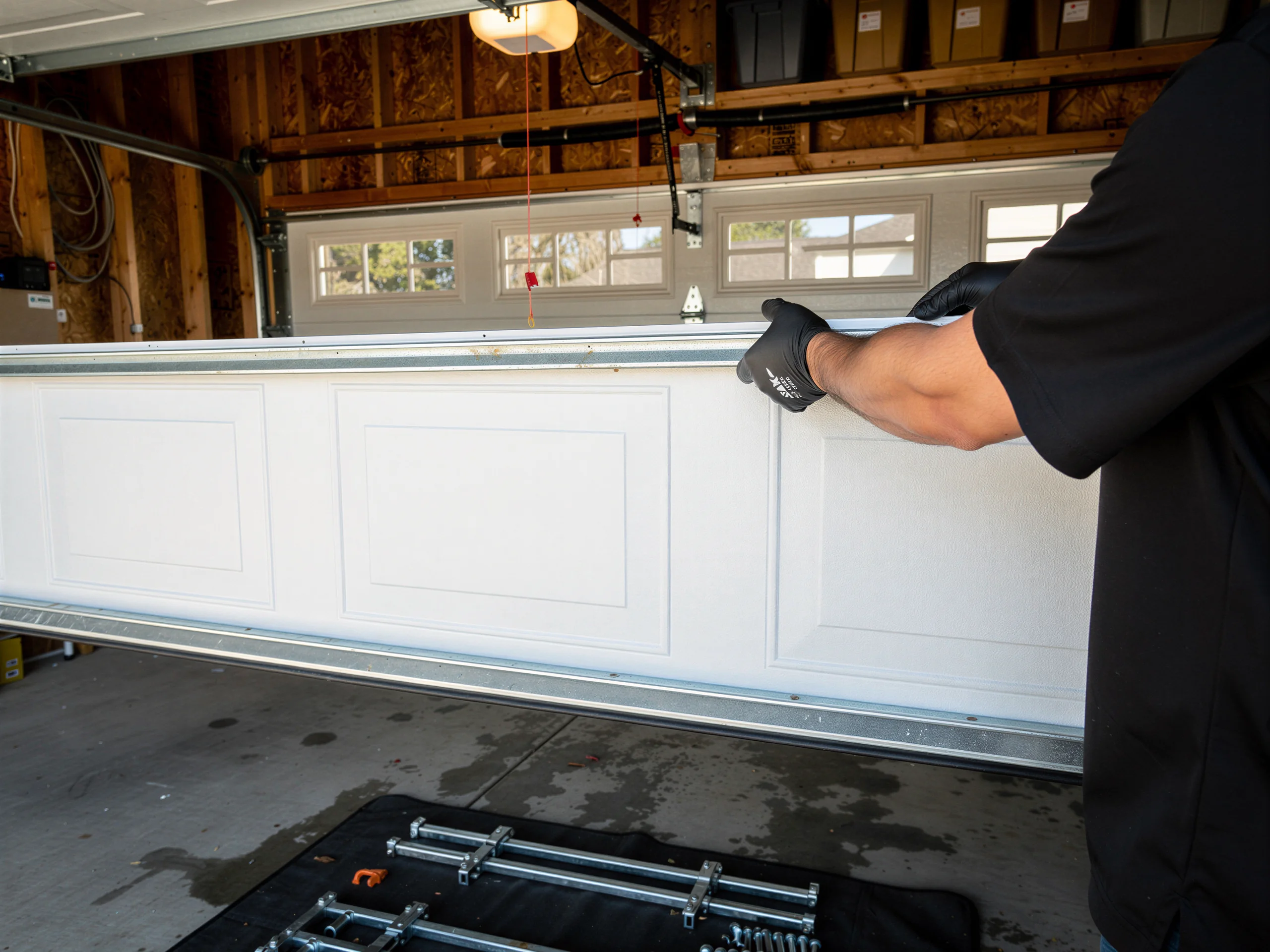
Panel replacement is rarer here - steel sectional doors from this era hold up well in this region's moderate heat band, so warping and sun-cupping aren't the driver of service calls that they are on older wood-composite doors.
The Symptom
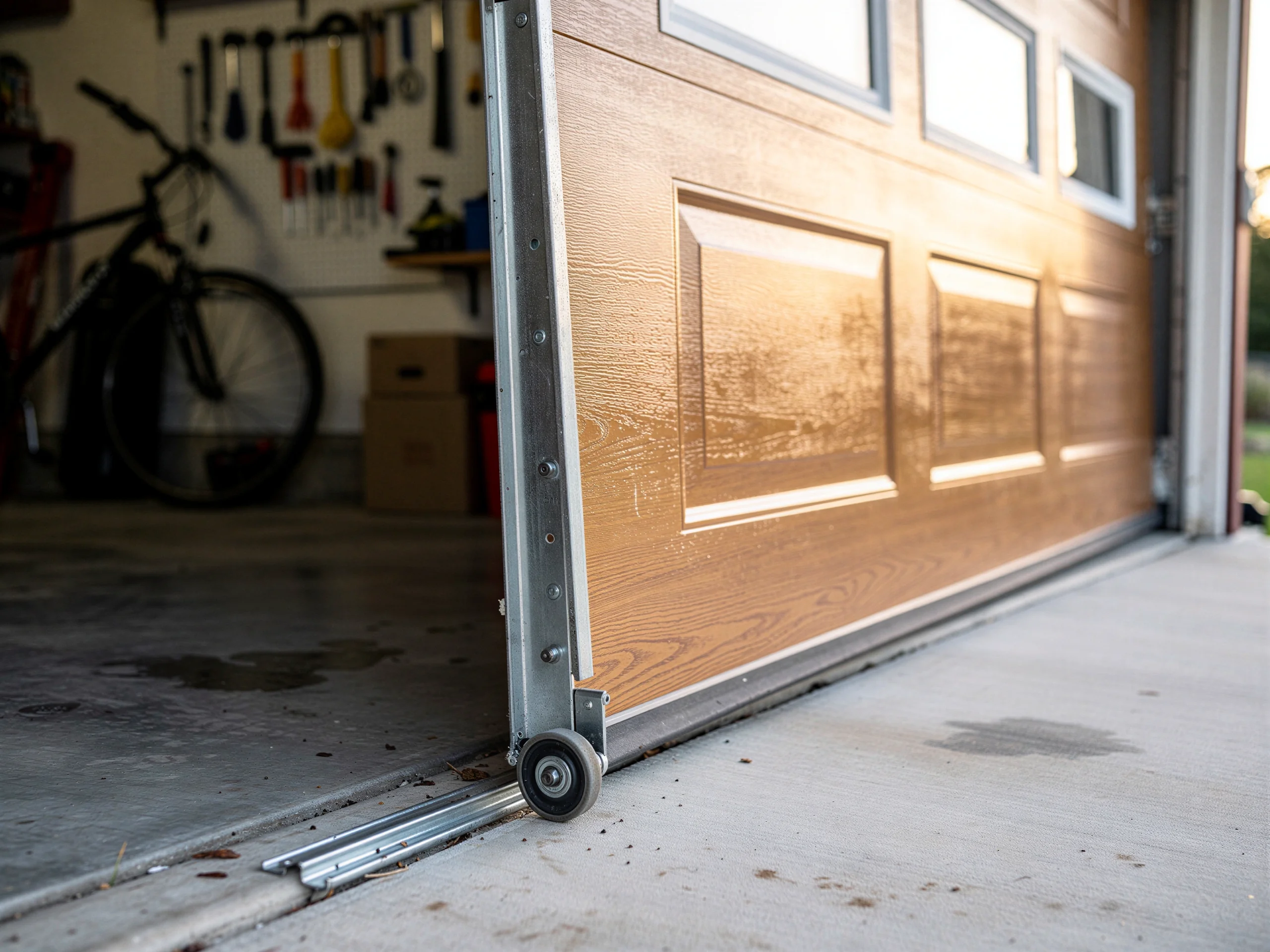
The symptom we hear most from Lantana is a door that reverses before it touches the floor, which on a 2007-built house almost always traces back to the photo-eye sensors or a opener limit setting rather than a worn-out spring - the kind of fault that's common on newer electronic openers and almost unheard of on the older pulley-driven doors you'll find on the far end of the service area. A grinding noise on the way up points more often to a roller or track alignment issue than a spring, simply because the springs on these newer builds haven't logged the cycle count yet to be the first suspect.
Talk to a local pro
Garage door service in Grapevine?
Same-day service with honest, upfront quotes.