Why This Fails Locally
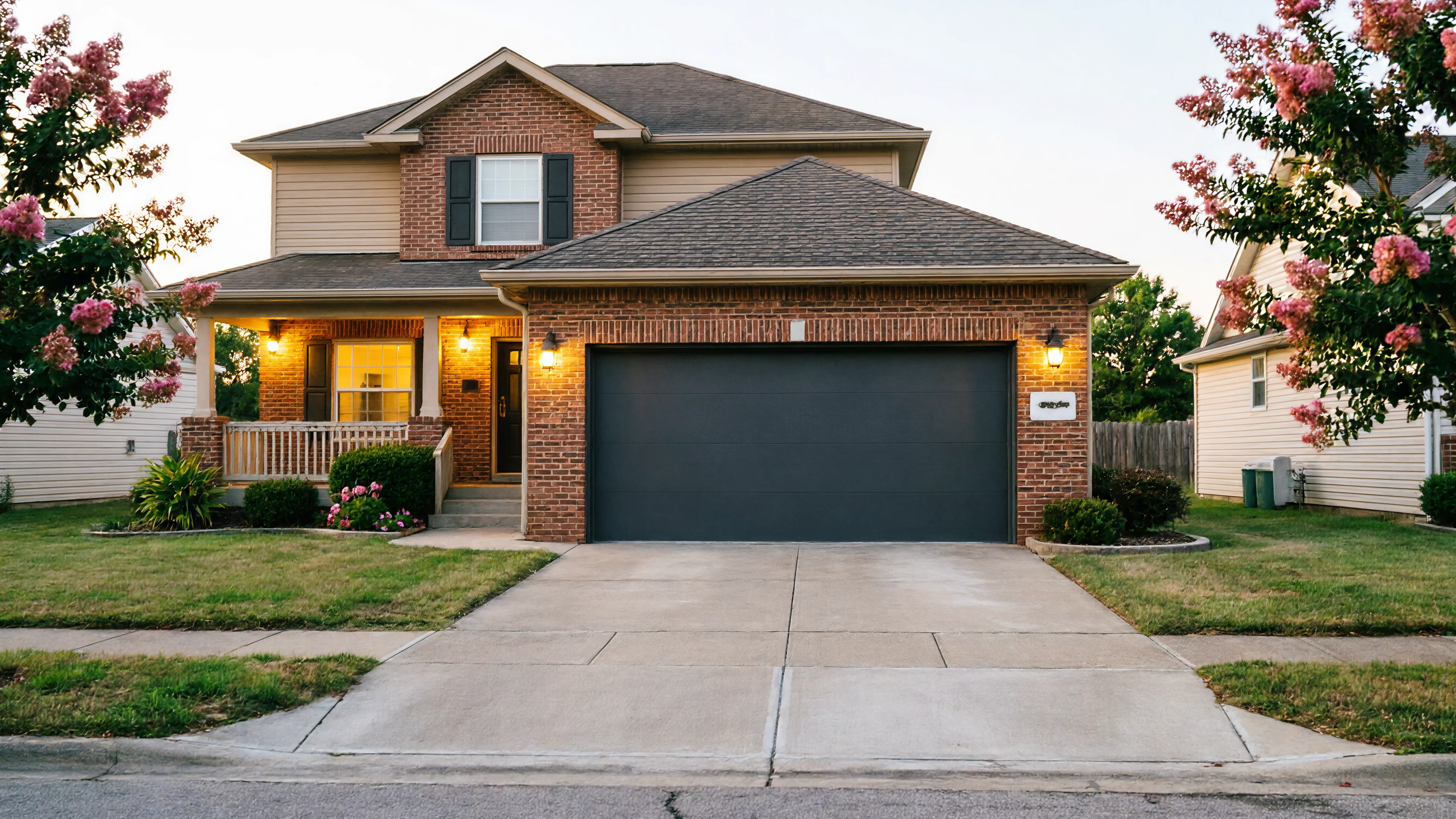
University Park sits about 17 miles out from our shop in Grapevine, and that drive shapes how this kind of call actually works. We're not around the corner, so when you call about a door hanging crooked in the opening, we want to know what we're walking into before the truck leaves - is the door still moving on one side, is it jammed halfway, is a cable hanging loose. That one phone conversation saves a second trip.
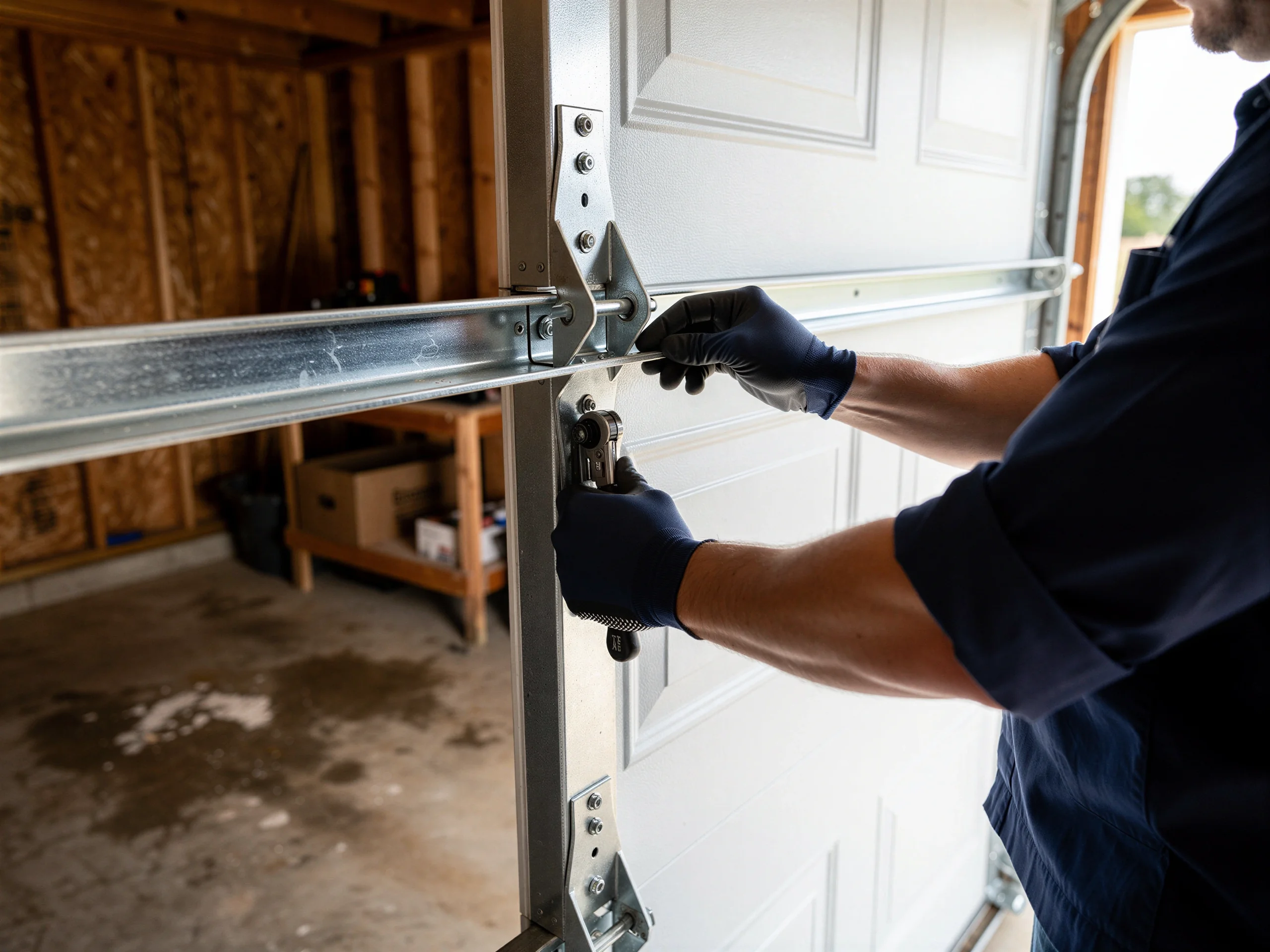
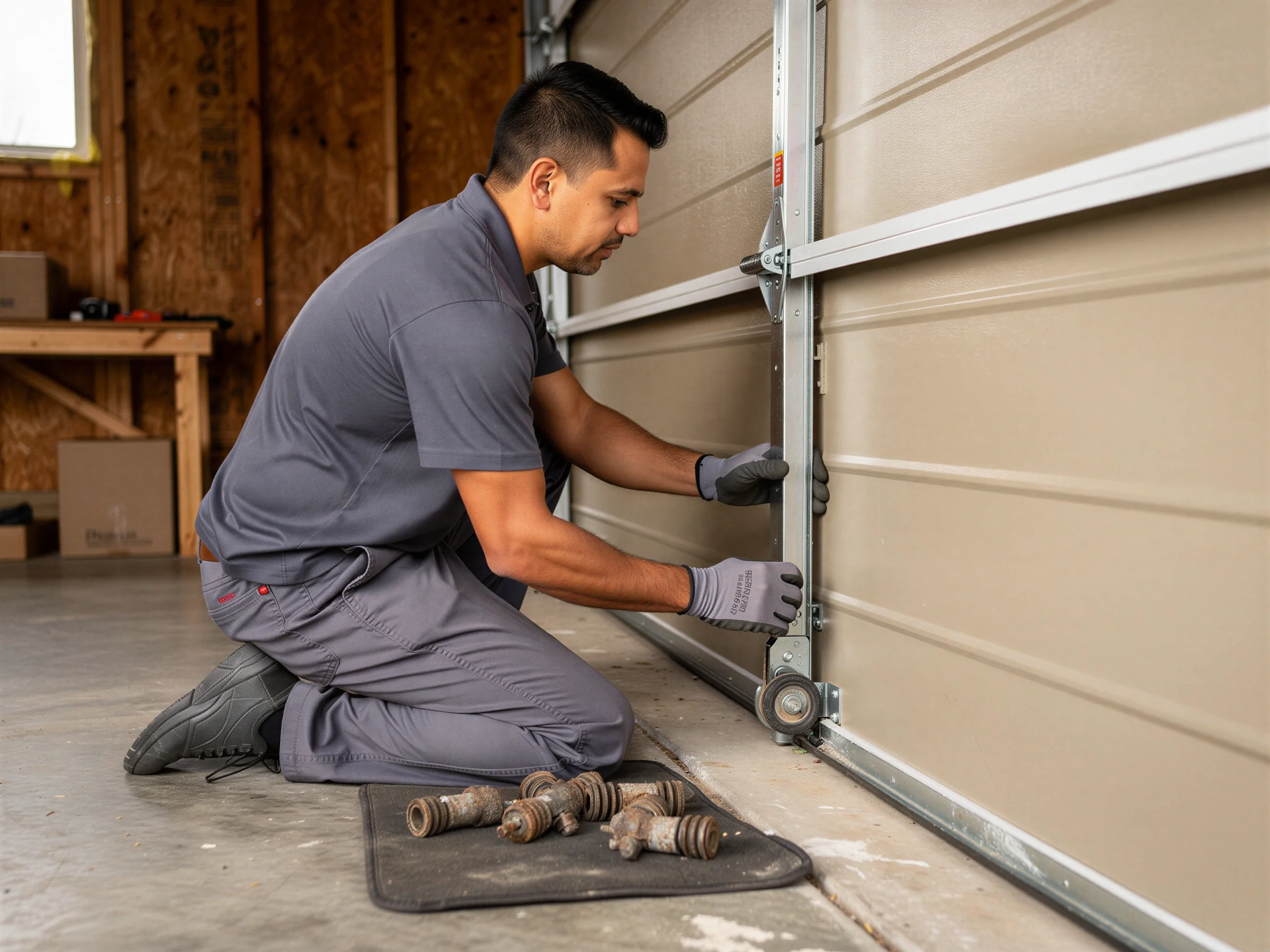
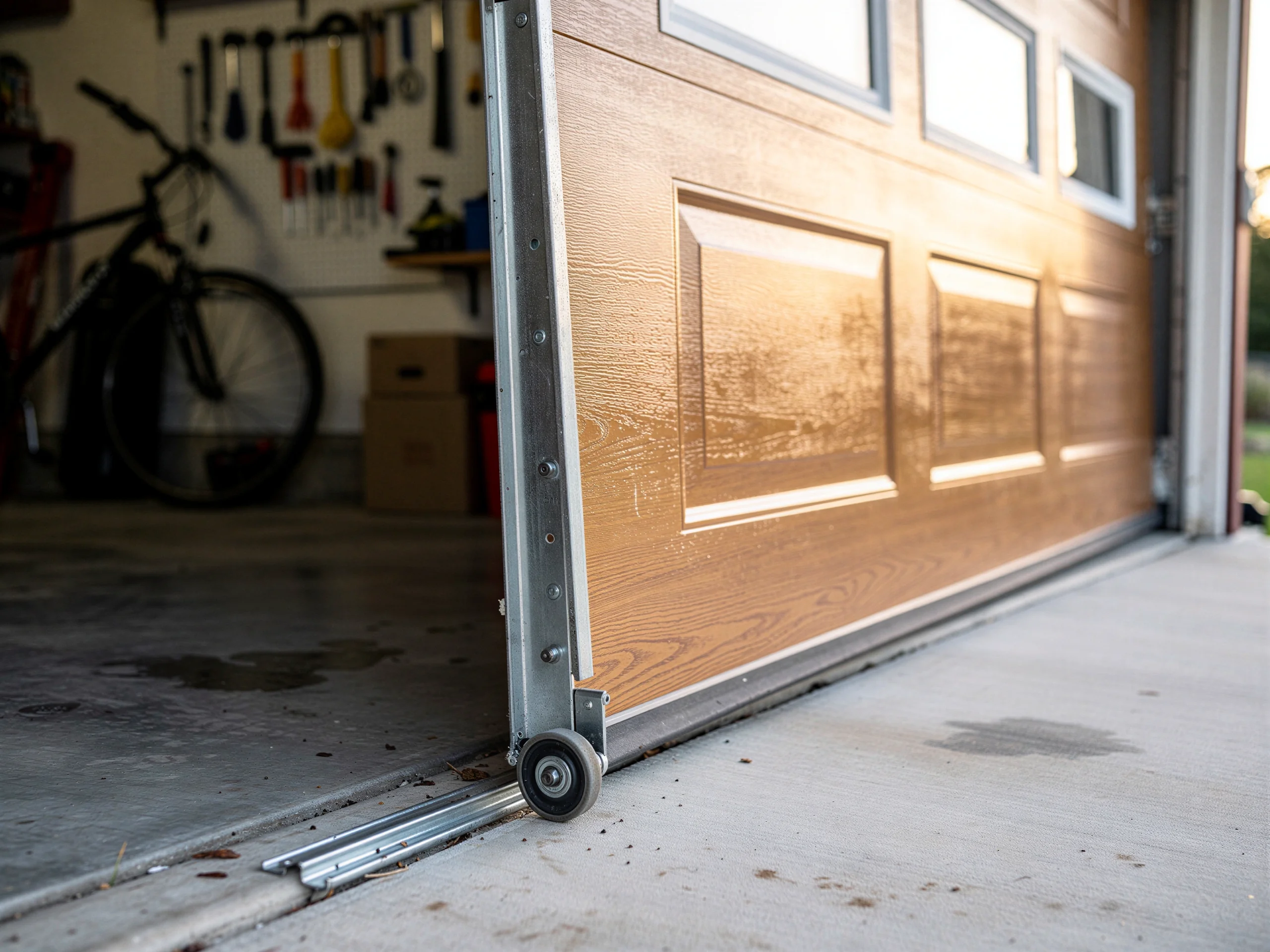
Most houses in this part of University Park went up around 1987, which puts them square in the stretch of construction across this area that ran 1980s into the 90s. Doors from that build era were hung on steel track with brackets that were fine for the original door weight, but three decades of use loosens the lag screws holding those brackets to the jamb. A bracket that's pulled even an eighth of an inch lets the roller walk off the track edge under load - usually on the bottom panel, right where the door takes the most stress opening and closing.
That's a different root cause than you'd get from a door installed in 2005 with mounting hardware spaced to a newer code. Here, the fix starts with the bracket, not just the roller.
What the Fix Involves
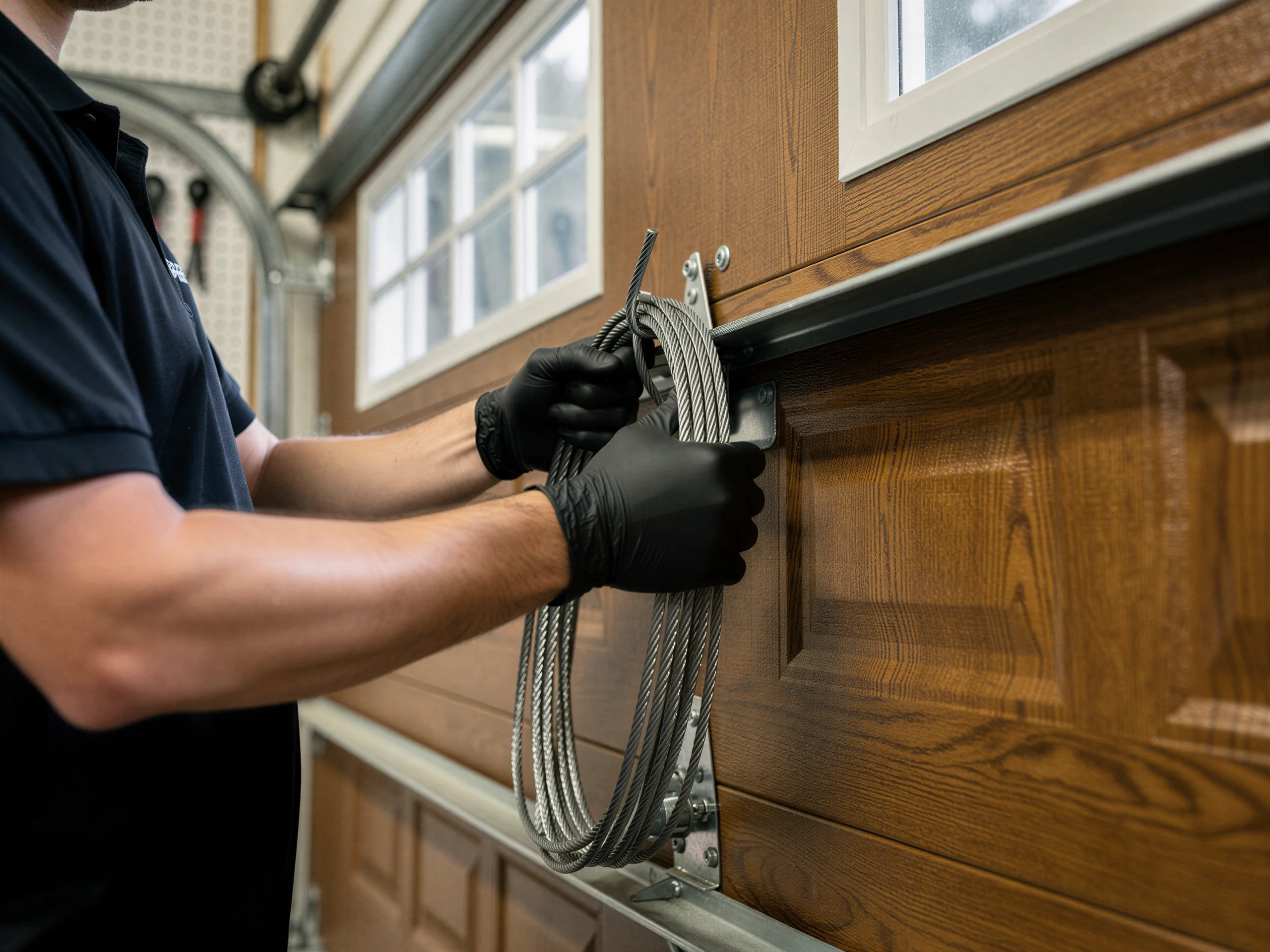
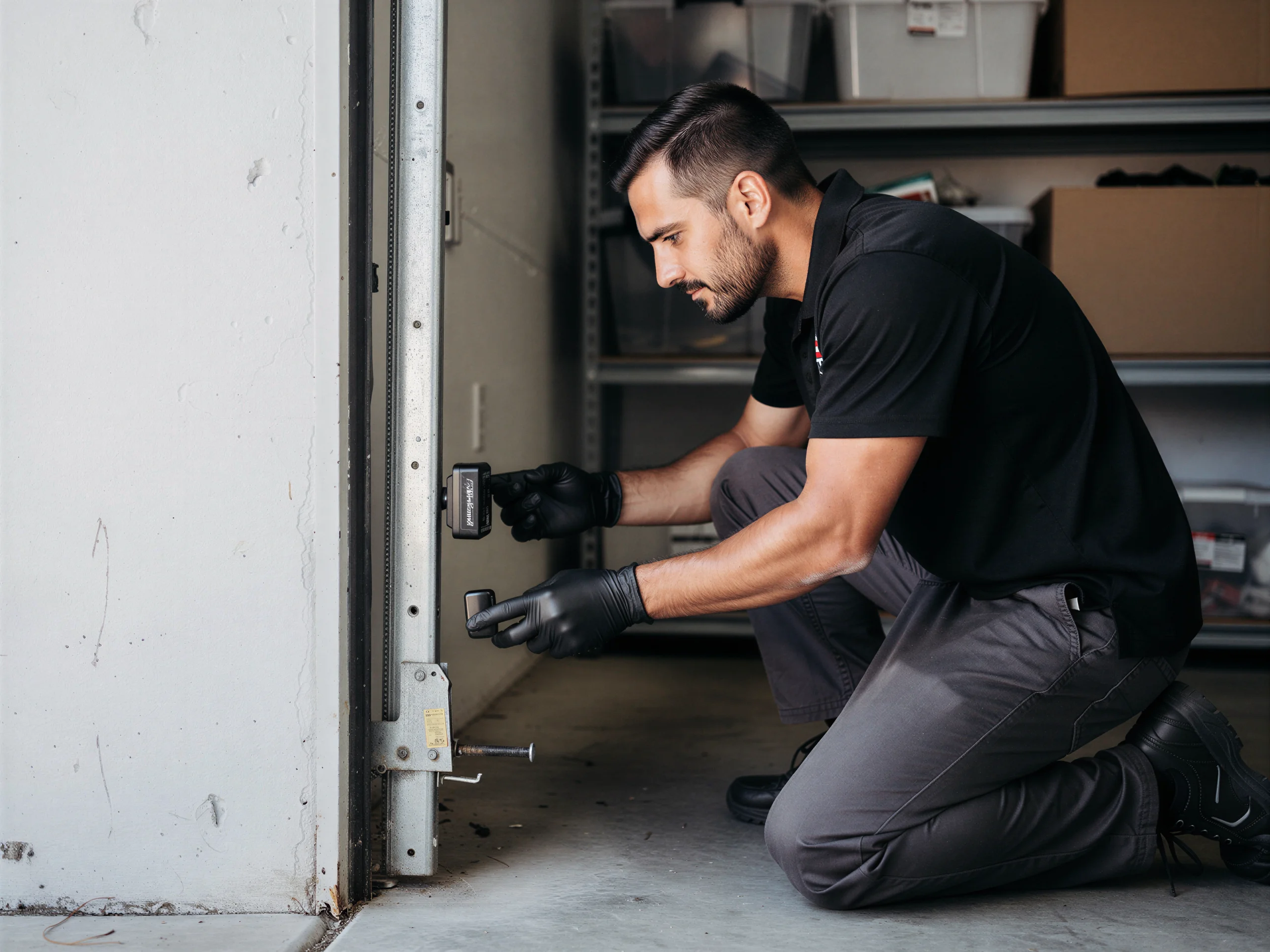
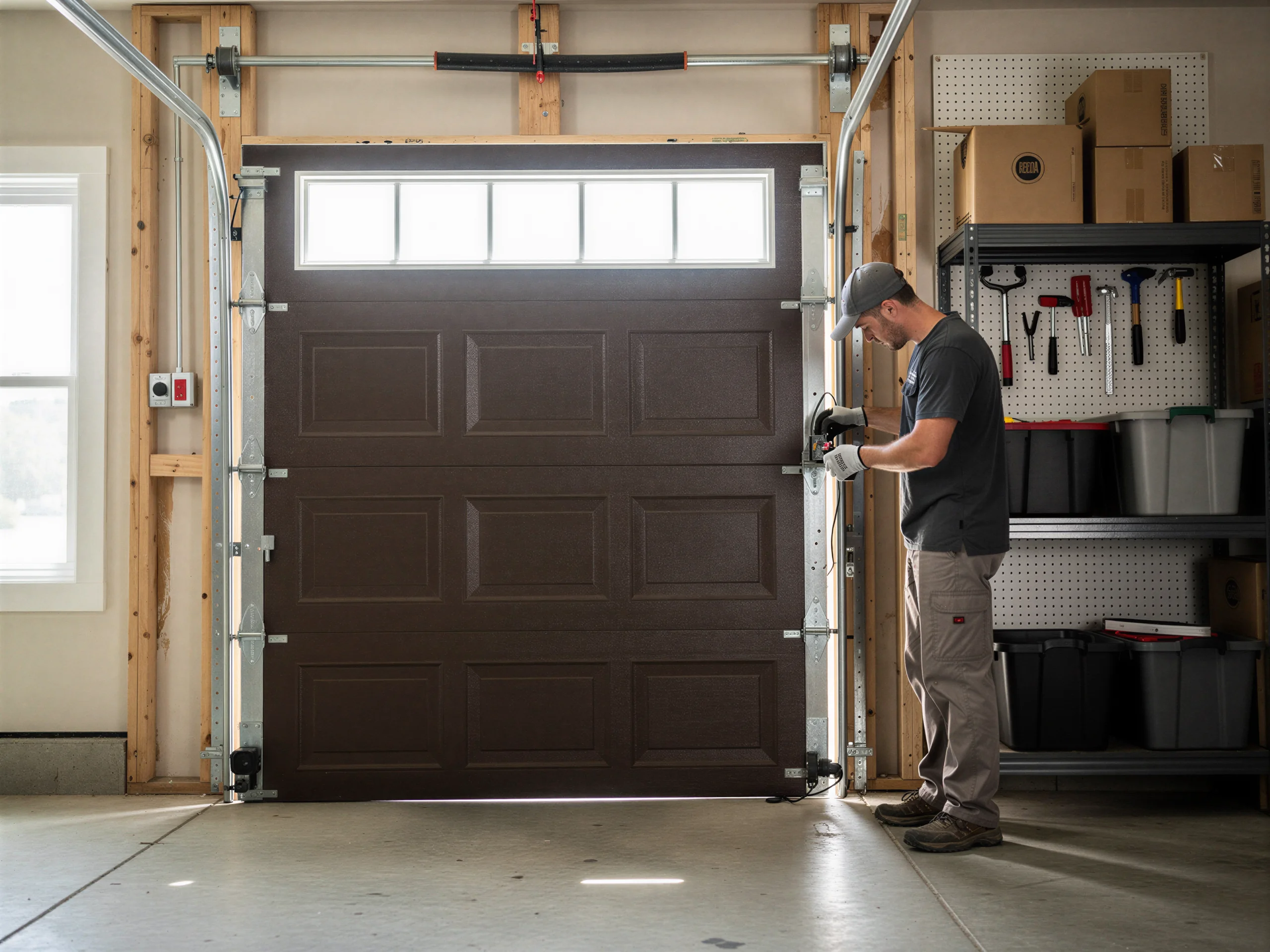
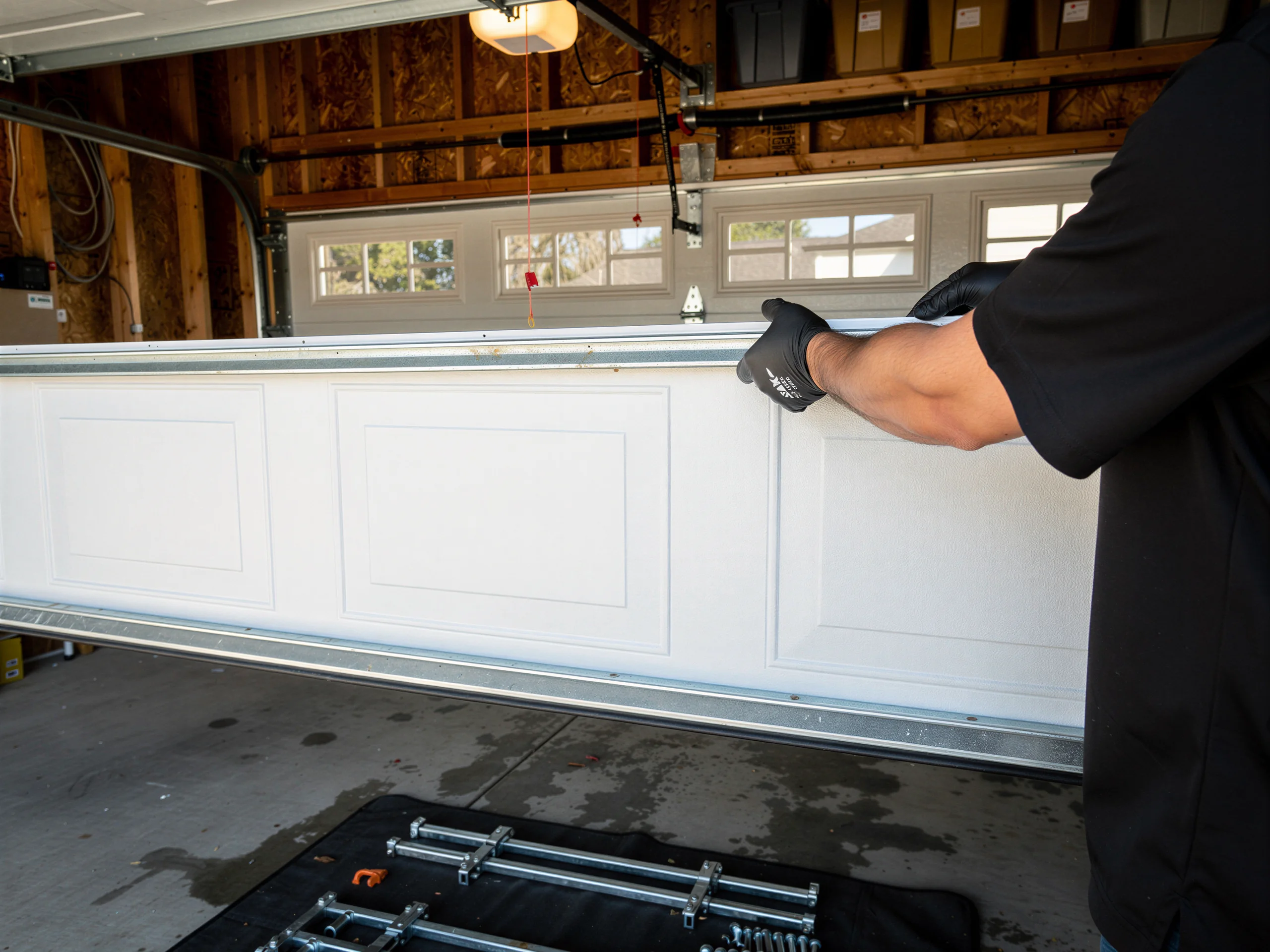
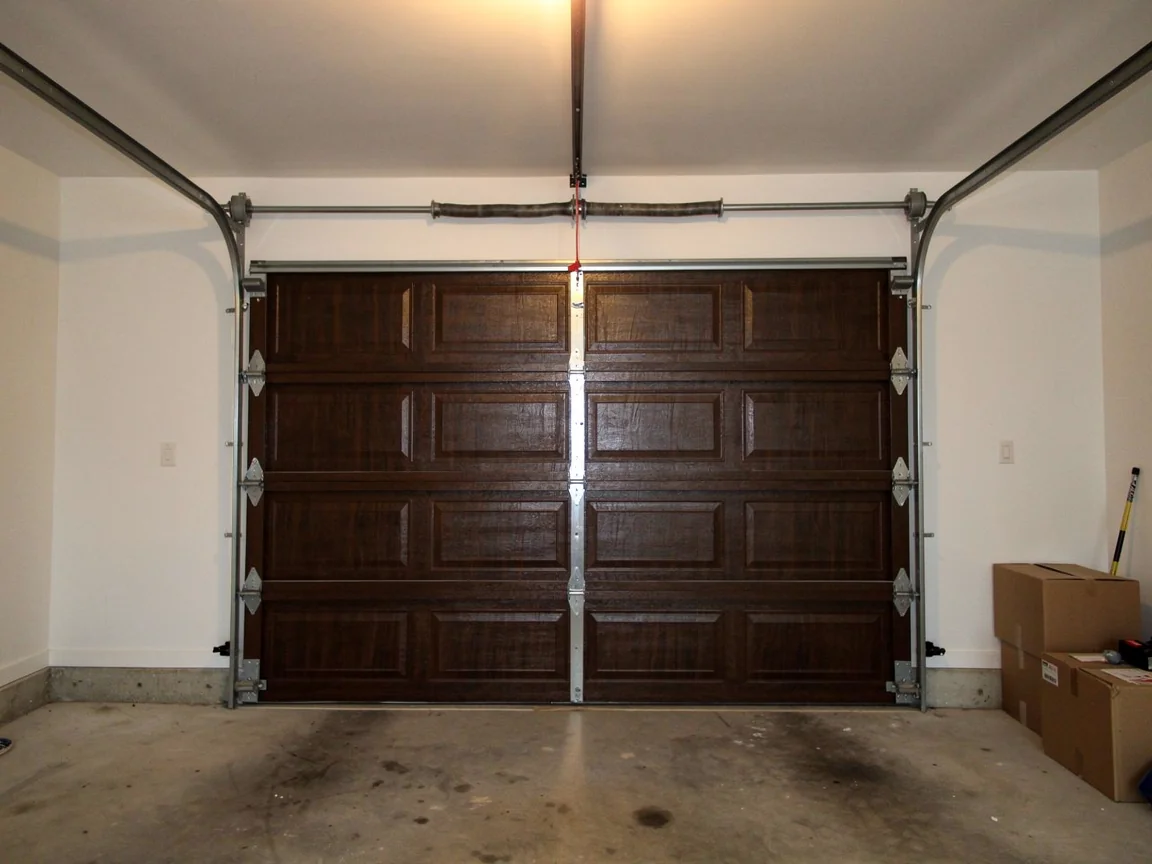
Getting a door back on track isn't just lifting it back into the channel. First we check why it jumped - a bent track, a broken roller, a bracket pulled loose from the jamb, or a cable that's come off its drum and let one side of the door drop unevenly.
Vintage bracket and track fix
On the 1987-era doors common here, we're usually re-securing bracket hardware into solid framing, straightening or replacing a section of track, and swapping any rollers that have chipped or seized.
Safety cable routing
If the door is on extension springs rather than a torsion bar - common on builds from this period before torsion became standard - we also check that the safety cables are still routed through the spring, since a derailed door sometimes means that cable has already failed once. We don't force a bent track back into shape and call it done.
Gouged track replaced
If the track is bent enough that it's already scored or gouged, we replace that section rather than bend it back, because a reshaped track tends to let the door jump again within a few months. That's slower and costs more up front, but it's the difference between fixing it once and fixing it twice.
Doing It Yourself
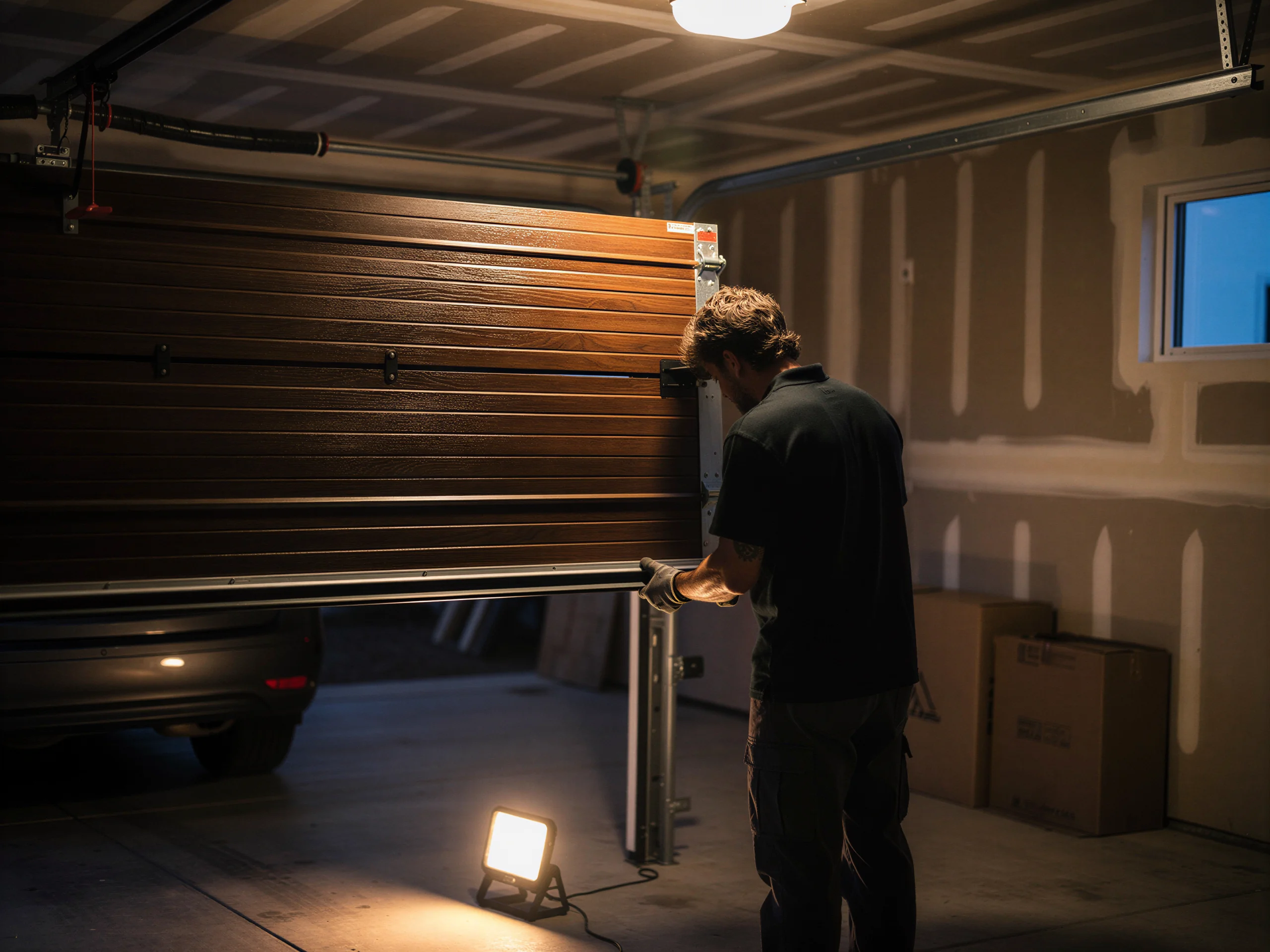
If the door is only off by a little and still rolling freely on one side, some homeowners get it back into the channel themselves with the door disconnected from the opener.
Forcing derailed panels
That's about as far as we'd recommend going without a call. The door is heavy enough, and the springs under enough tension, that forcing a derailed panel back into track by hand is one of the more common ways people get hurt working on garage doors.
Frayed cable warning
If a cable has come off the drum or looks frayed, stop there - that's not a DIY fix, full stop. A cable under load that lets go while someone's hands are near the track can take fingers.
Phone diagnosis limits
One honest limitation: we can't always diagnose over the phone whether this is a ten-minute track realignment or a bracket that needs to come out of the jamb. For a door built in the late 80s, with three decades of settling in the framing, that distinction usually only shows up once someone's hands are on it.
How Long It Takes
A straightforward track realignment, once we're on site, usually runs under an hour. Where it runs longer is bracket replacement - pulling a bracket out of jamb wood that's taken 35-plus years of screw cycles sometimes means the original holes are stripped, and we're shimming or relocating the mounting point rather than just driving a new screw into the old hole.
Because the call starts with a 17-mile drive from Grapevine, we try to nail down what's actually wrong before we're en route, so the parts and tools for a bracket job are already on the truck instead of us coming back a second day.
The Complications
Doors in this part of University Park tend to run heavier and better insulated than the regional norm, which tracks with household income here running well above the surrounding area - homeowners here more often went with steel doors with foam cores or carriage-style overlays rather than the thinner panel doors common on older, lighter-duty tract housing. That extra weight means a derailed door puts more strain on a bent or weakened bracket, and it's part of why we don't recommend bending a track back into shape on these doors instead of replacing the damaged section.
The other complication is parts lead time on anything custom - if the door is a higher-end overlay style rather than a standard steel panel, a replacement section or matching track bracket sometimes has to be ordered rather than pulled off the truck, and that can add a few days to a job that would otherwise close out same-visit.
Talk to a local pro
Garage door service in Grapevine?
Same-day service with honest, upfront quotes.